Most homeowners drastically underestimate the time required for post-construction cleanup. What seems like a straightforward weekend project routinely expands into weeks of interrupted effort, delaying move-in timelines and consuming dozens of hours that could be spent enjoying the newly renovated space.
This miscalculation stems from hidden complexity multipliers that don’t become apparent until you’re knee-deep in construction dust. Unlike regular household cleaning, post construction cleaning in Oakville involves specialized protocols, safety equipment, and material-specific techniques that exponentially increase the time investment beyond simple square footage calculations.
The true cost of post-construction cleanup extends far beyond the immediate hours spent scrubbing surfaces. Hidden time drains compound through re-cleaning cycles, opportunity costs during critical move-in periods, and long-term maintenance issues that emerge months after inadequate initial cleaning. Understanding these cascading time costs reveals why professional intervention represents not just a convenience, but a strategic decision that protects your most valuable resource.
This analysis exposes the specific mechanisms that transform simple cleanup into extended timelines, demonstrating how professional teams compress weeks of DIY effort into single days while preventing future time drains that homeowners rarely anticipate.
Time-Saving Realities for Post-Construction Cleanup
- Construction cleanup typically takes three times longer than initial homeowner estimates due to hidden complexity factors
- DIY approaches create re-cleaning cycles that extend timelines exponentially through dust resettlement and inadequate equipment
- Professional teams compress 24-32 hours of weekend work into 6-8 hour sessions through systematic coordination
- Inadequate initial cleaning creates ongoing time costs for years through finish damage and maintenance complications
Why Post-Construction Cleanup Takes Three Times Your Initial Estimate
The standard calculation homeowners use—estimating time based on square footage alone—fundamentally misunderstands the nature of construction debris. Different materials create dramatically different cleaning requirements that don’t scale linearly with space.
Drywall dust, for instance, behaves completely differently than concrete residue or wood shavings. The fine particulate from drywall becomes airborne with the slightest disturbance, settling into HVAC systems, light fixtures, and textured surfaces where standard cleaning methods prove ineffective. Industry data shows professional teams typically spend one hour cleaning every 100 to 200 square feet, but this baseline multiplies significantly based on material composition and debris density.
Safety protocols represent another invisible time drain. Homeowners rarely account for the setup required for proper protection—HEPA filtration systems need assembly and positioning, protective gear must be donned and changed regularly, and disposal protocols require sorting debris by category and transporting it to appropriate facilities. These preparatory and cleanup phases can consume as much time as the actual cleaning work.
The following comparison reveals how different construction materials dramatically alter cleaning complexity and time requirements:
| Material Type | Cleaning Method Required | Time Multiplier |
|---|---|---|
| Drywall Dust | Deep cleaning at least one day after rough clean for dust settlement | 2.5x baseline |
| Paint Residue | Special chemicals for paint spills on floors and windows | 3x baseline |
| Concrete Debris | Industrial shop vacuums in every room | 2x baseline |
Oakville’s seasonal climate adds another layer of complexity that affects cleaning timelines. Winter’s low humidity creates static electricity that makes fine dust cling to surfaces with remarkable tenacity, while summer humidity causes particulate to absorb moisture and adhere to finishes. These environmental factors alter dust behavior in ways that standard cleaning approaches fail to address.
Detail work around fixtures, trim, and corners introduces non-linear time scaling. A 2,000 square foot space doesn’t take twice as long as a 1,000 square foot space—it often takes three to four times longer because the ratio of detail work to open floor space increases with project complexity.

The microscopic nature of construction dust becomes evident when examined closely. These fine particles penetrate porous surfaces and lodge in microscopic crevices that household cleaning equipment simply cannot reach. Understanding this material behavior explains why surface-level cleaning creates the illusion of completion while leaving embedded contamination that resurfaces repeatedly.
Medical Facility Post-Construction Timeline Analysis
A 10,000 square foot medical office required professional cleaning costing $6,000, with services including debris removal, disinfecting, window cleaning, exterior pressure washing, and thorough floor cleaning. The facility’s stringent cleanliness requirements revealed that comprehensive post-construction cleaning involved far more than debris removal—it required contamination control protocols and multi-stage processes that would have been impossible for facility staff to execute while maintaining operational timelines.
The Re-Cleaning Cycle That Traps DIY Homeowners
The most insidious time drain in DIY post-construction cleanup isn’t the initial cleaning—it’s the perpetual re-cleaning loop that emerges from inadequate methodology. This cycle typically begins 24-48 hours after the first cleaning attempt, when homeowners discover that surfaces they’ve already cleaned are once again covered in a fine layer of dust.
This phenomenon occurs because construction dust doesn’t simply settle on visible surfaces. It infiltrates HVAC ductwork, lodges in ceiling fans, and embeds in carpet fibers and upholstery. Every time the heating system cycles or a door opens, contaminated air circulates through the space, redepositing particulate on freshly cleaned surfaces. The physics are unforgiving— dust thrown in the air settles in approximately half an hour, creating a continuous contamination cycle without proper system cleaning.
Consumer-grade vacuum cleaners compound this problem by lacking true HEPA filtration. These devices capture larger debris while exhausting fine particulate back into the air, where it settles on surfaces the homeowner has already cleaned. This creates the frustrating “I just cleaned this yesterday” experience that characterizes DIY attempts.
The sequential nature of DIY work—clean a room, move to the next, discover the first room is dusty again—stands in stark contrast to professional systematic approaches. Homeowners naturally work room-by-room, but without addressing contamination sources first (HVAC systems, ceiling fixtures, wall cavities), each cleaned space becomes re-contaminated by ongoing dust circulation.
Each re-cleaning cycle compounds not just time investment but psychological burden. Decision fatigue sets in as homeowners question their methods, purchase additional equipment, and debate whether to continue or hire professionals. This mental load extends the effective timeline far beyond the physical hours spent cleaning, creating stress that permeates the entire post-renovation period.
The re-cleaning trap also creates a cascading delay effect on other move-in tasks. Furniture delivery gets postponed, decorating consultations are rescheduled, and final inspections face delays—all because the basic prerequisite of a clean space remains elusive. These downstream impacts transform what homeowners envisioned as a one-weekend project into a weeks-long ordeal that disrupts the entire transition timeline.
What Oakville Homeowners Sacrifice During Weekend Cleanups
The opportunity cost of DIY post-construction cleaning extends far beyond the hours spent with cleaning supplies. For Oakville families who’ve just invested significant resources in renovation or construction, the immediate post-completion period represents a critical window for enjoying the fruits of that investment—a window that DIY cleaning systematically closes.
Weekend time carries premium value for working families. Those Saturday and Sunday hours could be spent hosting the first dinner party in a renovated kitchen, enjoying a renovated backyard space with children before the season changes, or simply recovering from the stress and disruption that construction inevitably creates. Instead, they’re spent in repetitive physical labor that yields diminishing returns with each re-cleaning cycle.
The project management burden of coordinating post-construction tasks gets compressed when cleanup extends beyond anticipated timelines. Furniture delivery windows, decorator consultations, and contractor punch-list appointments all require a clean, accessible space. When that space isn’t ready, these appointments cascade into delay, creating scheduling conflicts and extending the overall project timeline by weeks.
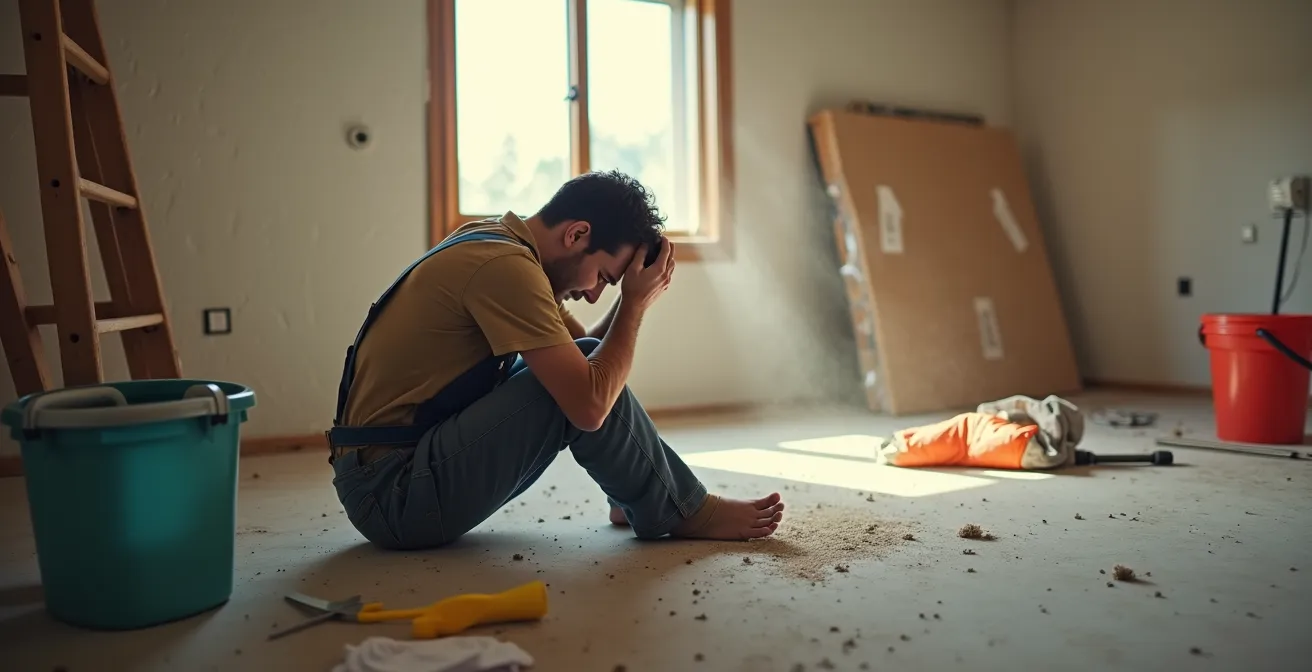
Physical exhaustion from manual construction cleanup doesn’t confine itself to weekends. The sustained effort of moving debris, reaching high surfaces, and breathing particulate-laden air creates fatigue that extends into the work week. This diminished energy affects professional performance and family interactions, creating a hidden cost that rarely factors into the DIY versus professional calculation.
Relationship stress emerges when family members have different tolerance levels for mess and different priorities for the new space. One person wants to start enjoying the renovation immediately, while another insists on perfect cleanliness first. The extended cleanup timeline transforms these differing preferences into ongoing friction, turning what should be a celebratory period into a source of tension.
The ability to actually enjoy the renovated space—the fundamental reason for the investment—gets deferred indefinitely. Each weekend spent cleaning is a weekend not spent creating positive memories in the new environment. This delayed gratification can sour the entire renovation experience, creating a psychological association between the beautiful new space and exhausting labor rather than enjoyment and accomplishment.
How Professional Teams Compress Weeks Into Single Days
The dramatic timeline compression professional cleaning teams achieve stems from systematic methodology rather than simply working faster. The fundamental difference lies in parallel processing—while one team member addresses HVAC contamination, another handles surface cleaning, and a third manages debris removal. This concurrent tasking eliminates the sequential delays inherent in DIY approaches.
Specialized equipment transforms time requirements in ways consumer-grade tools cannot replicate. Industrial HEPA filtration systems create negative air pressure that captures particulate at the source rather than allowing it to circulate and resettle. Commercial-grade vacuums with true HEPA filters and greater suction capacity complete in one pass what requires multiple attempts with household equipment. Proper disposal systems—commercial dumpsters and relationships with recycling facilities—eliminate the time-consuming trips to disposal sites that DIY approaches require.
The systematic top-to-bottom, inside-to-outside approach professionals employ follows contamination control principles that prevent rework entirely. By cleaning ceiling fixtures and HVAC vents first, then walls, then surfaces, and finally floors, the workflow ensures that debris from one stage doesn’t contaminate already-cleaned areas. This methodology, refined through thousands of projects, eliminates the re-cleaning cycles that plague DIY attempts.
For a typical Oakville renovation project, the timeline comparison proves striking. What a homeowner estimates as “one weekend” typically becomes three to four weekend days—24 to 32 hours spread across multiple weeks due to re-cleaning cycles and equipment limitations. Professional teams compress this same scope into a continuous 6 to 8 hour session, completing the work in a single day and delivering a truly clean space ready for immediate occupancy.
This efficiency creates compound value beyond mere time savings. The renovation and construction process already disrupts normal life for weeks or months. Professional cleaning represents the definitive endpoint that allows life to return to normal immediately rather than extending the disruption through weeks of inadequate DIY cleanup attempts. For insights into managing the broader renovation timeline effectively, exploring renovation and transformation tips can provide valuable strategic perspective.
Coordination with other trades represents another professional advantage. Cleaning teams understand the sequence of post-construction tasks and can work around final inspections, punch-list repairs, and other concluding activities. This integration into the broader project timeline creates efficiencies that isolated DIY efforts cannot achieve, ensuring the entire construction-to-occupancy transition flows smoothly without unnecessary delays.
Essential Insights
- Material-specific cleaning requirements create time multipliers ranging from 2x to 3x baseline estimates that homeowners systematically overlook
- Re-cleaning cycles from HVAC contamination and inadequate equipment extend DIY timelines exponentially beyond initial projections
- Professional parallel processing and systematic methodology compress 24-32 hours of DIY work into 6-8 hour single-day completions
- Long-term time costs from finish damage and warranty complications can exceed immediate cleanup time by orders of magnitude
The Long-Term Timeline Cost of Inadequate Initial Cleaning
The time-saving calculation for professional post-construction cleaning extends far beyond the immediate cleanup phase. Inadequate initial cleaning creates hidden time drains that emerge months or even years later, often exceeding the time that would have been saved through proper initial methodology.
Construction dust embedded in new finishes accelerates wear in ways that require premature refinishing or replacement. Fine particulate that settles into hardwood floor grain acts as an abrasive, creating microscopic scratches with every footstep. Dust in tile grout prevents proper sealing, allowing moisture penetration that leads to cracking and discoloration. Paint applied over dusty surfaces shows premature peeling and adhesion failure. These finish degradation issues typically become apparent within 12 to 24 months, requiring refinishing timelines that dwarf the hours professional cleaning would have consumed.
Warranty protection timelines represent another critical consideration. Many flooring, cabinetry, and appliance manufacturers require professional post-installation cleaning as a condition of warranty coverage. DIY approaches that fail to meet these standards risk voiding warranties entirely, creating potential future timelines for replacement rather than covered repair when issues emerge. Reviewing and understanding these requirements often reveals that professional cleaning isn’t optional—it’s a prerequisite for protecting the investment.
HVAC maintenance timelines accelerate dramatically when ductwork remains contaminated with construction dust. The fine particulate continuously cycles through the system, clogging filters every few weeks rather than every few months, coating evaporator coils and reducing efficiency, and creating conditions for mold growth in humid seasons. This ongoing contamination transforms what should be annual HVAC maintenance into quarterly interventions, consuming hours of scheduling, technician visits, and system downtime. Just as proper drainage for new homes prevents future water damage timelines, thorough HVAC cleaning prevents recurring maintenance burdens.
The hidden cleaning burden represents perhaps the most frustrating long-term time cost. Inadequate initial cleaning means discovering construction dust for months afterward—behind appliances when cleaning, in window tracks when changing seasons, in light fixtures when changing bulbs. Each discovery triggers a mini-cleaning session, transforming what should have been a one-time cleanup into a perpetual low-grade maintenance task that continues indefinitely.
Air quality issues from residual dust can create health timelines that extend far beyond cleaning. Respiratory irritation, allergic reactions, and aggravated asthma require medical appointments, medication management, and environmental testing to identify the source. For families with young children or elderly members, these health impacts represent serious quality-of-life concerns that consume time and resources far exceeding the cost of proper initial cleaning.
The compound effect of these long-term time costs reframes the professional cleaning decision entirely. What appears as an optional expense to save immediate time reveals itself as a strategic investment that prevents cascading future time drains. The true comparison isn’t DIY time versus professional cost—it’s DIY time plus ongoing re-cleaning plus future repair timelines versus a single professional intervention that eliminates all downstream time costs.
Frequently Asked Questions About Post-Construction Cleaning
What happens if HVAC systems aren’t properly cleaned after construction?
Dust in ductwork creates recurring filter changes and reduced efficiency, requiring accelerated maintenance timelines. The contamination continuously recirculates through your home, redepositing dust on cleaned surfaces and potentially creating air quality issues that affect health and comfort for months after construction completion.
Can inadequate cleaning void warranties on new materials?
Many material warranties require professional post-installation cleaning as a coverage condition. DIY approaches that fail to meet manufacturer specifications risk voiding coverage, creating future replacement timelines rather than covered repairs when issues emerge. Always review warranty documentation before deciding on cleaning methodology.
How long does construction dust continue appearing after DIY cleaning?
Without proper HVAC system cleaning and comprehensive surface treatment, construction dust typically continues appearing for three to six months after initial DIY cleanup. The dust lodges in ductwork, ceiling cavities, and other hidden spaces, then gradually migrates to visible surfaces through normal air circulation and seasonal HVAC usage changes.
Why does post-construction cleaning take longer than regular deep cleaning?
Construction debris includes specialized materials like drywall dust, concrete residue, and adhesive overspray that require different cleaning methods than regular household dirt. These materials often need chemical treatments, specialized equipment, and multiple-stage processes. Additionally, construction dust penetrates porous surfaces and HVAC systems in ways that household dirt does not, requiring systematic approaches beyond surface cleaning.